
Keep Marching
What Today's Protest Movement Can Learn from the Suffragists

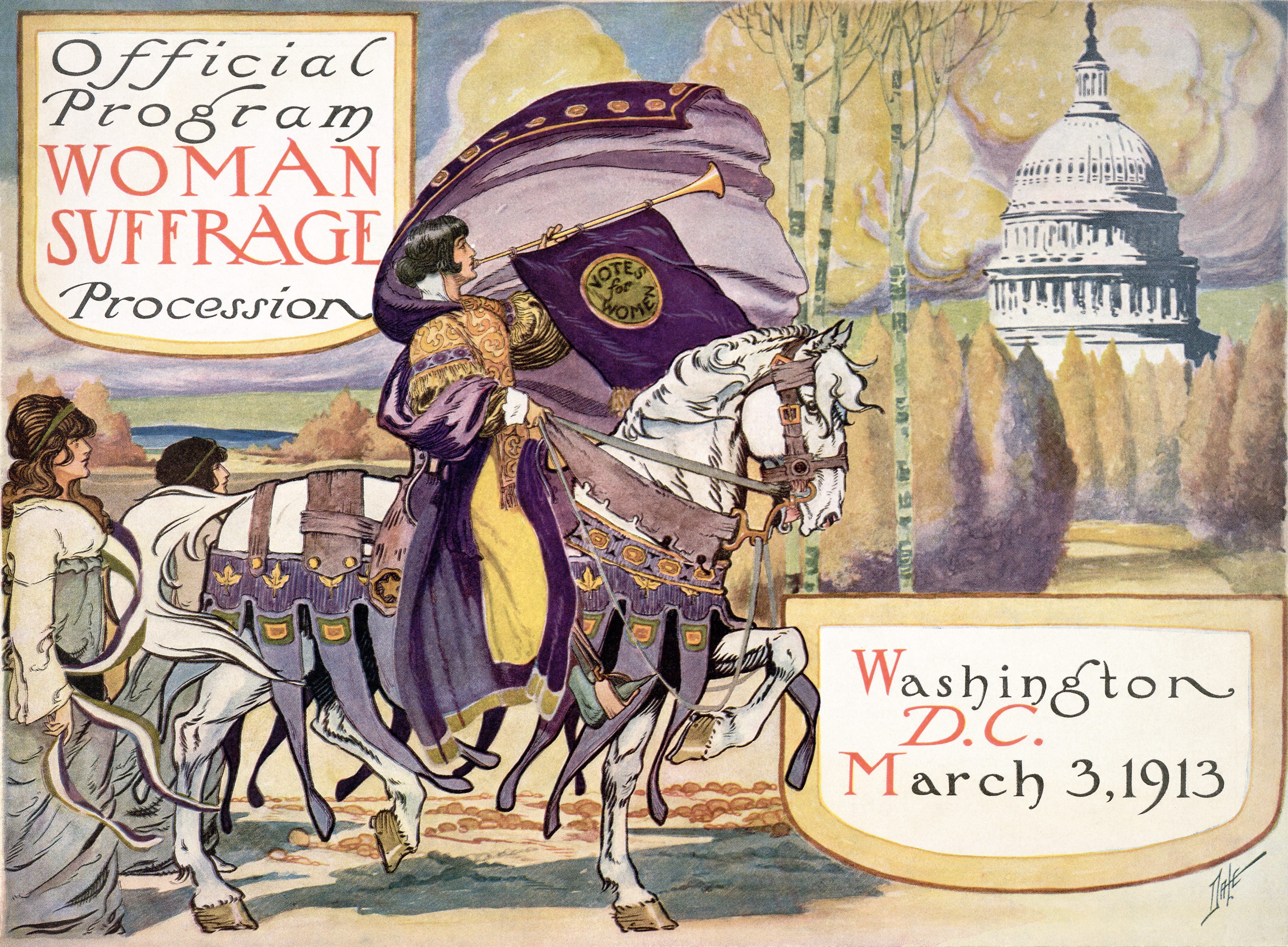
In the cold of the early morning on March 3, 1913, women from all over the country began to filter through the streets of Washington DC toward the Peace Monument on First Street and Pennsylvania Avenue NW. They wore every color of the rainbow, carried banners and signs, cradled trumpets and French horns. Electricity filled the air, each woman another spark, a unique packet of unstoppable energy.
They were gathering for one reason and a singular occurrence in history. The Women’s Suffrage Procession, an all-women march scheduled to take place on the same day President-Elect Woodrow Wilson moved to Washington DC. Roiled from economic shocks wrought by the oligarchic Gilded Age, the American electorate had swept a slate of reformers into office last November - Wilson among them. But while the silver-tongued orator spoke elegantly of reform, he rarely followed through on his rhetoric and stood staunchly opposed to women gaining the vote, or a voice really, at all.
But Alice Paul, the architect of that day’s event, hoped to change his mind, or if this proved impossible, then the political calculous that enabled him to maintain his anti-suffrage stance through an undeniable exhibition of women’s capacity and competence to join the ranks of democracy’s stewards.
At noon, the procession began. Texan and horsewoman Jane Walker Burleson inaugurated the procession as she trotted into the street, boldly carrying a banner that read: “Forward into Light.”
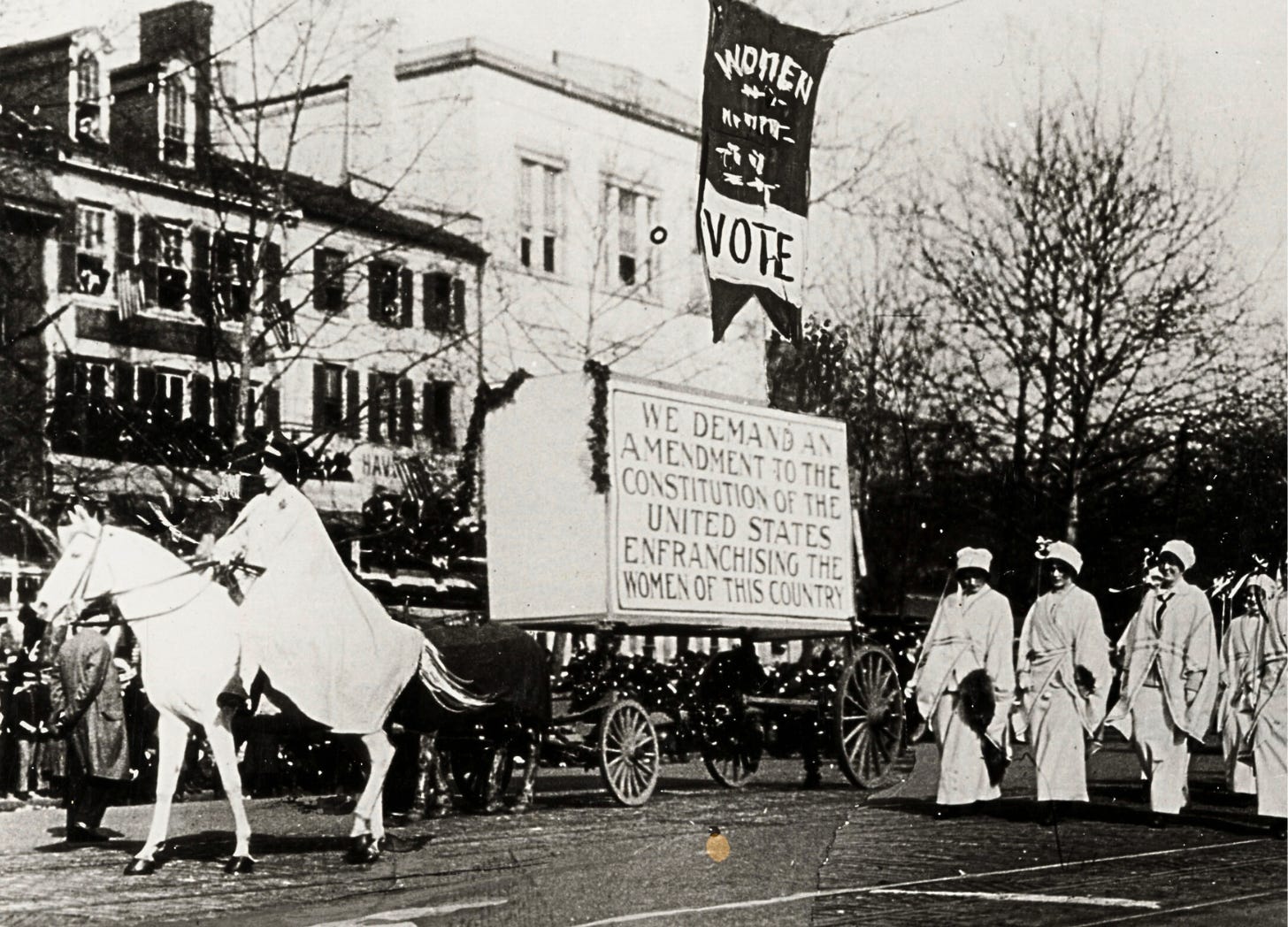
Behind her, lawyer and Suffragist spokeswoman Inez Milholland rode into the street like Athena incarnate on her white horse, wearing a white cape and a white crown. Beside her, a cart drawn by two draft horses carried an enormous moving billboard.
Next came a company of women from nations that had already granted them the right to vote. Norway, Finland, Australia, and New Zealand.
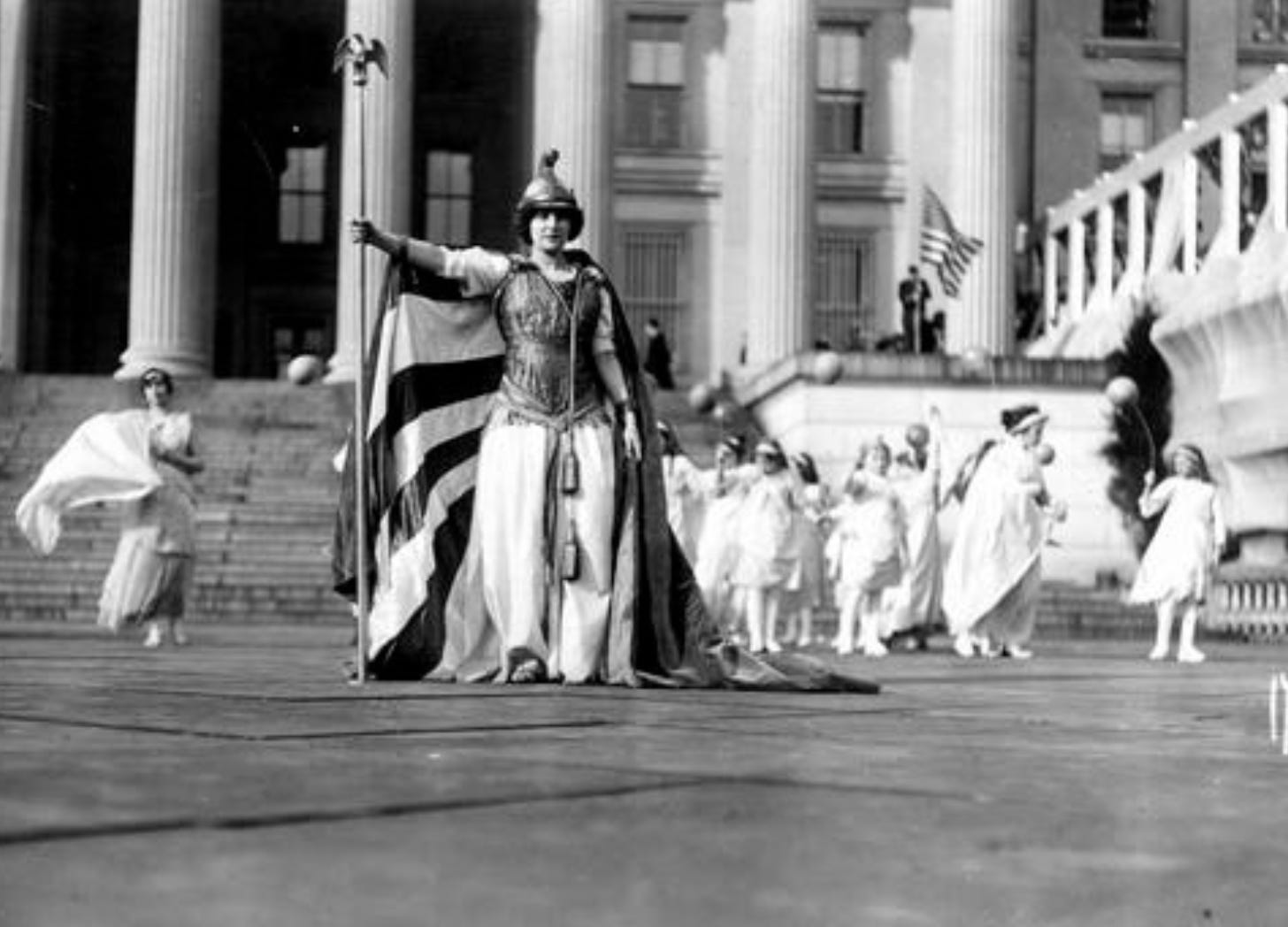
Then, a procession the likes of which the nation had never seen began to unfurl. In the successive hughes of the rainbow, women from all over America carried banners demanding their liberation, played songs of freedom in marching bands, and acted out famous scenes of women’s historical contributions from Ancient Greece to Sacagawea’s indispensable role in the famed Lewis and Clark Expedition. Their convincing, expertly staged, and undeniably powerful pageant for universal suffrage and women’s empowerment stretched over a mile.
And the misogynistic men in the crowd could not stand it. They began by hurling insults as the women passed. The police commissioned to serve and protect the marchers did nothing to intervene. Testing the ropes, the agitators found them flimsy. Unencumbered and emboldened, they pushed their way into the street.
Violent chaos descended as men began slapping and punching the women. Some were grabbed by their arms, legs, and hair then dragged away from the safety in numbers of the parade and out onto the sidewalks, alone with their assailants. Women on horseback wielded their riding crops in defense while others on foot brandished their hatpins as blades.
Over 100 injuries were reported that day, some minor, others serious. The police made no arrests, and it wasn’t until President-Elect Wilson dispatched the US Calvary that any semblance of order was restored. Of the 5,000 that began the day, only 2,000 completed the march. And yet, their defeat on this unwanted battleground would become another victory in their bid for enfranchisement.
The following day, newspapers across the country reported on the violent assault by hoodlums and the dignity displayed by the women asking for their right to vote. The coverage pushed once more against the tide of public opinion. Though it would be years more before the 19th Amendment would be ratified, the sea change in national sentiment enabled Montana, Nevada, and New York to amend their State Constitutions to include women’s suffrage, which in turn paved the way for national ratification. While millions of women worked for generations to gain the right to vote, there are few historians that would argue the Woman Suffrage Procession and Alice Paul’s expert utilization of street theater, visual rhetoric, and mass choreography to be anything other than pivotal.
Jump to our current moment. I went to our local The 50501 Movement Protest last weekend on a beautiful spring day. As my husband and I circled, looking for parking with our kids in the back of the minivan, we were astonished to see so many people flooding the streets and heading towards the beginning of the march. Thousands joined the procession in our sleepy little Southern California city. Some carrying signs, some chanting, and some, like us, trying to keep our little ones engaged.
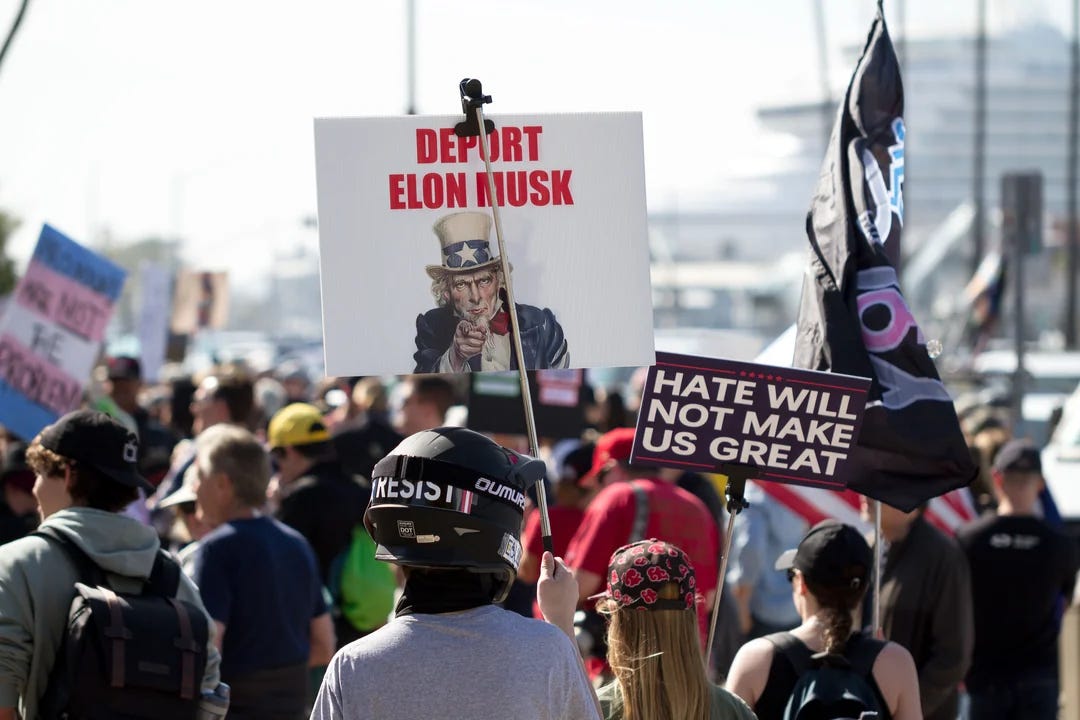
But truth be told, the event lacked a sense of cohesiveness - or even a common purpose. Palestinian flags flew alongside calls to preserve Medicare that rubbed against feminist slogans that abutted clever witticisms about felon 47. Groups of 3, 4, or 5 walked together or meandered, as the case turned out to be. But we were not marching. We were not in lockstep. We were not even in solidarity with each other.
I’m not trying to overcomplicate the issue. Nor am I even criticizing The 50501 Movement. To get 5.5 million Americans in the street on a single day protesting all the injustices being visited on the country and the world by this corrupt regime is nothing short of commendable and historic. I am in awe!
But so, too, do I wonder if we could incorporate the sense of pageantry and cohesion that Alice Paul so successfully wielded in forwarding the cause of Women’s Suffrage.
Could we create online platforms for those in a geographic region to coordinate around issues - kind of like a Meet-Up for protesting, enabling people to join, say, the Veterans Group, Medicaid Group, Women’s Rights Group, LGBTQ+ Group, or the Black Lives Matter Group, to name a few examples.
Each group might then be able to share ideas about street theater tactics, sign stencils, songs, chants, or any other protest tactics. Such groups might also foster like-minded communities of solidarity in specific regions and then nationally. They would also encourage people to show up and turn out on the day of - not only because they are afraid and mad and it’s the right thing to do. But because their friends are there, they are collectively engaged in building a better America.
I am not the one to build these things. And I am sure many are working on them already. But to succeed in building a movement capable of winning and outlasting this moment, we must find new structures of community and engagement. The 50501 Protests are an incredible foundation. Let’s build on it.
If you are working on something like this in your community, please drop a link in the comments. Or, if you have ideas about how to do this, please share! Now more than ever, we need to learn from each other.
In the meantime, Keep Marching.
Mobilize.Us and Indivisible.Org just organized Hands Off protests in cities across our nation🌟🌟🌟🌟🌟🇺🇸
Suffs is on repeat in our household. My kid knows all the words. I think you’re right about the problem of cohesion. I’m wondering if / how we create a narrative that encompasses and embraces all these separate stories. Because that IS powerful. That IS the beauty of democratic values. I get to say stuff (even if you don’t like it) and you get to say stuff (even if I don’t like it) because of this big, messy, democratic society we live in. I know that’s ideal - but isn’t that what we are supposed to be working toward - the ideal? Not to mention, the rule of law. Everything that is being protested does have something to do with violations of the rule of law. We cannot let our feelings overshadow the rule of law.